
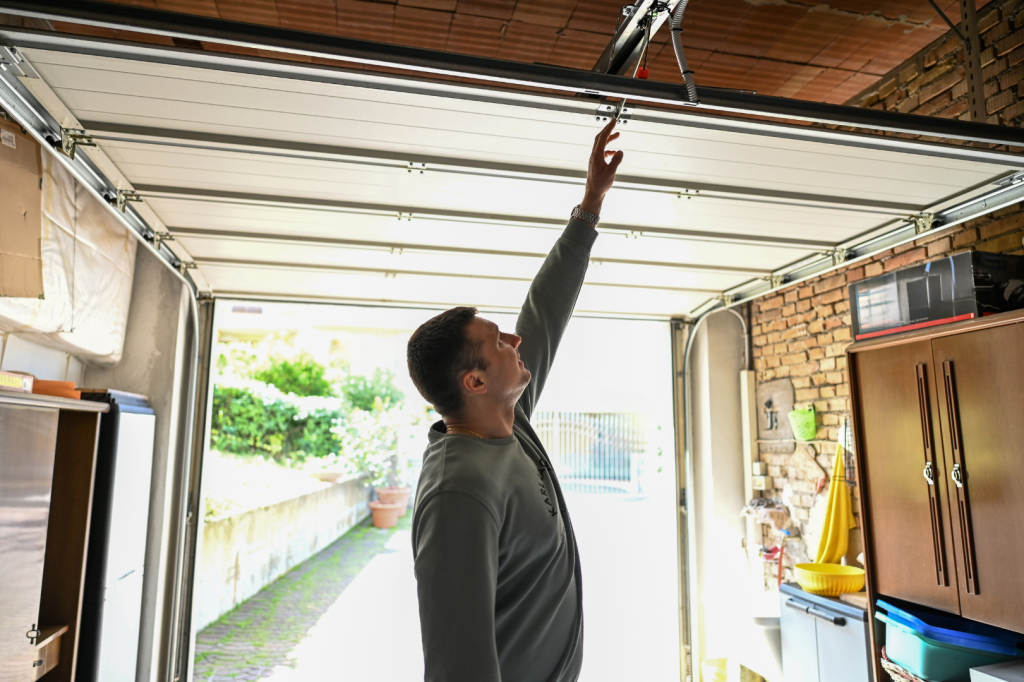
After 22 years of garage door repair across Greenville and the Upstate, one pattern stands out clearly. Some homes cycle through service calls every few years while neighboring houses with nearly identical doors go a decade without needing anything beyond routine maintenance. The difference almost never comes down to luck or which brand was installed. It comes down to a specific set of factors that drive wear faster than the components were designed to handle. Understanding those factors is how homeowners stop reacting to repairs and start getting ahead of them.
How Often the Door Cycles Matters More Than Most Homeowners Realize
Every residential garage door spring is rated for a finite number of cycles. According to standards published by the Door and Access Systems Manufacturers Association (DASMA), the recognized industry body for garage door specifications, standard residential torsion springs are factory-rated for approximately 10,000 cycles under correct load conditions. One cycle equals one complete open and one complete close.
The math is straightforward once you apply it to real household use. A home where the door opens and closes four times a day goes through roughly 1,460 cycles per year, meaning a standard spring reaches its rated limit in about six to seven years. A home where the garage is the primary entry for multiple drivers and the door cycles eight to ten times daily burns through those same 10,000 cycles in three to four years. We see this consistently in Greenville homes where families with multiple vehicles use the garage as their main entrance. The spring that should last a decade is failing before a child finishes middle school, not because the spring was defective, but because the usage rate was never factored into the original specification. High-cycle springs, which are rated for 20,000 cycles or more by using a thicker wire diameter and longer coil length, exist specifically for households in this situation and are one of the most cost-effective upgrades we recommend at the time of replacement.
The Original Installation Quality Sets the Baseline for Everything That Follows
A garage door system set up correctly at installation, with springs matched to the actual door weight, rollers sized for the track gauge, and tracks verified plumb before the first cycle, performs better and requires less garage door repair over its service life than one where shortcuts were taken at the beginning.
One situation we come across regularly in newer Upstate subdivision homes is a door where the builder installed standard springs on a heavier insulated door without matching spring specifications to the door’s actual weight. DASMA’s technical documentation on spring cycle life is explicit on this point: a spring applied to a door weighing more than its counterbalance specification operates under excessive stress on every single cycle, shortening its rated lifespan significantly. What should be a 10,000-cycle spring installed on an undersized specification becomes a much shorter service interval in practice because it never operates within the load range it was designed for. By the time the homeowner notices anything, the spring has often already reached the end of its compressed service life and the opener has been compensating for the imbalance for months.
The Door’s Material Directly Affects How Hard the System Works
Not all garage doors place the same demand on their springs, cables, and openers. Residential garage doors typically weigh between 130 and 350 pounds depending on size, material, and insulation. A properly balanced door, per manufacturer design parameters, should register approximately 8 to 10 pounds of resistance at the opener when the spring system is correctly tensioned. When the door’s actual weight is at the higher end of that range and the spring specification wasn’t upgraded to match, the opener is doing far more than 8 to 10 pounds of work on every lift.
In the Upstate, heavier insulated doors are increasingly common in newer construction because of their energy efficiency, but the spring and opener specifications don’t always follow the door weight upgrade. That mismatch is one of the most reliable predictors of frequent garage door repair calls we see across Greenville and surrounding areas in homes built in the last ten to fifteen years.
The Opener and Spring System Have to Match Each Other and the Door
Residential garage door openers are rated by horsepower, and that rating reflects how much lifting force the motor can produce within its design parameters. A standard 1/2 HP opener is appropriate for a lightweight single-car door. A heavier double-car insulated door requires at minimum a 3/4 HP unit to operate within the motor’s design load range. When a lighter-rated opener is paired with a heavier door, the motor runs hotter on every cycle, drive gears strip faster than their design life predicts, and thermal stress shortens the unit considerably.
What compounds this is that the spring system and the opener work together. A door whose springs are correctly tensioned presents approximately 8 to 10 pounds of resistance to the opener motor. A door with undersized or failing springs presents the full panel weight to the drive system. We’ve replaced openers in homes where the unit was only three or four years old, and the drive gear wear inside the housing told the same story every time: the motor had been running well above its design load because the spring specification was wrong for the door from the start. The opener didn’t fail early because it was a poor unit. It failed because it was doing work that was never part of its design specification.
Greenville’s Climate Accelerates Wear in Ways That Aren’t Always Obvious
The Upstate South Carolina climate creates specific conditions that drive component wear faster than homeowners in drier regions would expect. Hot, humid summers create the conditions for moisture to work into spring coils, cable strands, and roller bearings. DASMA’s technical data on spring cycle life specifically notes that rust reduces the effective cross-sectional area of spring wire, accelerating fatigue crack development. A spring in Greenville’s climate that hasn’t been lubricated in two or three years will show visible surface corrosion on its coils during inspection, and that corrosion is actively shortening its remaining cycle life even when the spring still appears to be functioning normally.
Cool winters add a different stress pattern. Metal contracts in the cold, and a spring near the end of its cycle life is significantly more likely to snap during the first cycle of a cold morning. We’ve received calls after cold snaps from homeowners whose springs failed that morning after months of warning signs that went unnoticed. The climate didn’t cause the failure, but it determined the timing.
Deferred Maintenance Creates a Compounding Repair Cycle
All of the factors above are manageable on their own. A home with heavy use but a correctly specified spring and a consistent lubrication schedule performs reliably for years. The homes that see the most frequent garage door repair calls are almost always the ones where multiple factors are present simultaneously and no preventive maintenance has been done.
A door that hasn’t been lubricated in two or three years in the Upstate climate arrives at a service call with rust on the spring coils, packed debris in the roller bearings, fraying on the cable strands near the bottom bracket, and enough grit in the track to create measurable drag on every cycle. None of those conditions is a crisis on its own. Together they represent a system significantly closer to a multi-component failure than a door that has been maintained. The cost difference is not marginal. It compounds with each additional cycle the door completes in that condition.
What Changes the Pattern
Not every home with heavy use or an older door ends up needing frequent repairs. The homes that break the pattern share consistent characteristics. The spring was specified correctly for the door’s weight and the household’s expected use rate at installation. The system has been lubricated at least annually to protect against the humidity-driven corrosion the Upstate climate accelerates. And small issues, a roller that starts running rough, a cable showing wear near the anchor, an opener that sounds different during the first foot of lift, were addressed before the downstream damage started.
The garage door is one of the most-used mechanical systems in a home, cycling thousands of times a year under load. The homes that treat it accordingly are the ones that don’t need emergency garage door repair. The ones that don’t are the ones we see most often.
Find Out What’s Driving Repairs at Your Home
If your garage door has been through more service calls than it should, the answer is almost always in the original setup, the use pattern, or the maintenance history rather than bad luck. Garage Doors Today has over 22 years of hands-on experience diagnosing and repairing garage doors across Greenville, Greer, Spartanburg, and nearby areas throughout the Upstate. We answer the phone 24 hours a day, seven days a week, and same-day service is available for most repair calls. Reach out today and let our team assess what’s actually driving the wear on your door.