
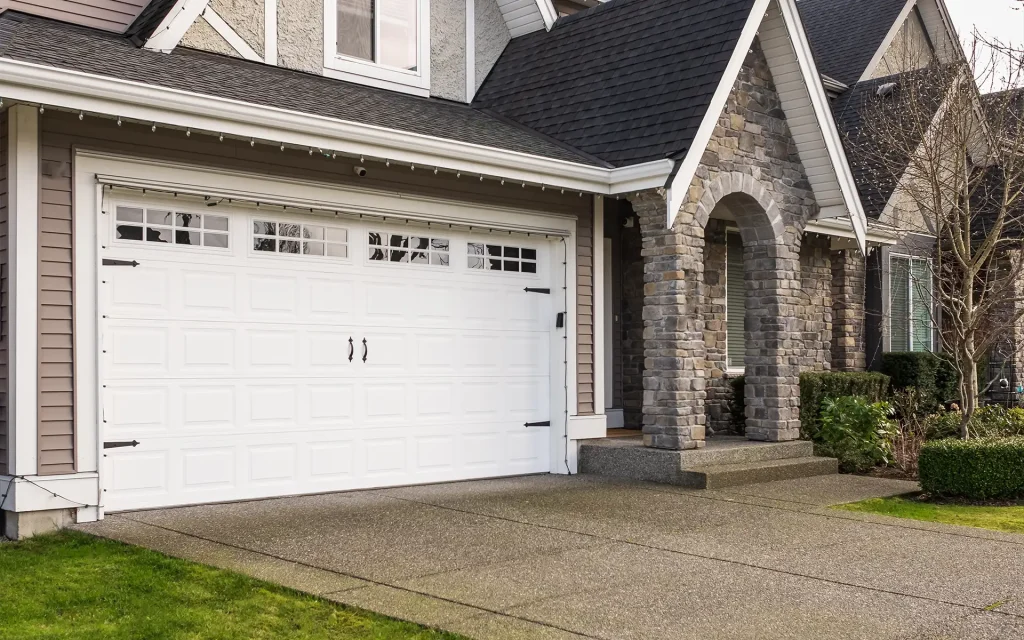
A garage door can squeak for a simple reason, but a spray can is not a universal fix. The useful distinction is straightforward: clean the tracks, lubricate approved moving joints, and leave tensioned hardware and model-specific opener parts alone unless the manufacturer says otherwise.
This garage door lubrication guide gives Greenville, SC homeowners a careful process for common sectional doors. Garage Doors Today Greenville LLC provides garage door maintenance, repairs, and same-day service when scheduling and conditions allow. We work quickly, explain what we find, and give fair, upfront pricing before approved work begins.
The Door & Access Systems Manufacturers Association, or DASMA, rec2. ommends monthly visual inspection and testing. Its safety guide says hinges, rollers, springs, and panels should be checked for wear or damage, notes that some parts may need periodic lubrication, and directs owners to the manual for their specific door. Amarr likewise maintains an official care and maintenance resource for garage doors and openers.
First, Know What Lubrication Can and Cannot Fix
Lubricant can reduce friction at an approved pivot or bearing. It may quiet a dry hinge or roller bearing. It cannot straighten a bent track, repair a cracked hinge, replace a frayed cable, restore a broken spring, or balance a heavy door.
Noise is information. A light squeak at a hinge is different from grinding, popping, scraping, or a sudden bang. Watch where the sound begins, but do not place fingers near moving sections.
If the door jerks, binds, drops, rises unevenly, or changes position when stopped, lubrication is not the next step.
Greenville garages also collect pollen, dust, grit, and moisture. Spraying lubricant into dirty tracks can make a sticky residue that holds more debris. Cleaning and lubricating are separate jobs: wipe the tracks so rollers have a clear path, then apply a small amount only at approved moving parts.
Safety Check Before Step One
Do not begin if the door is damaged, crooked, unusually heavy, hard to lift, off its tracks, or unbalanced. Stop using the door. Keep people and vehicles away and arrange professional garage door repair.
DASMA warns that springs are under high tension and says homeowners must not loosen or adjust bottom brackets, red fasteners, cables, or supports. Only trained door-system technicians should adjust those components. Do not touch cable drums, wind or unwind springs, loosen spring hardware, move bottom brackets, or attempt cable work. A suspected spring problem belongs with garage door spring replacement.
A loose, frayed, displaced, or broken cable belongs with garage door cable repair.
For a door that passes the visual check:
- Keep children, pets, tools, and vehicles away from the opening.
- Close the door fully and work from inside the garage.
- Unplug the opener so nobody can activate it. If the plug is not safely accessible, stop.
- Wear eye protection and gloves. Use a stable stepladder only on a level floor.
- Read the door and opener manuals. The model instructions override a general guide.
- Never reach between door sections or put any body part under the door.
What You Need
Gather clean rags, a soft brush or vacuum with a crevice tool, mild soap and water for grime, eye protection, gloves, and a lubricant approved by the door manufacturer. The label should identify the product as suitable for garage-door hardware or the materials and application named in your manual. Use the supplied straw for control.
Do not assume every oil, grease, penetrating product, or household spray is interchangeable. We are not making a blanket claim about WD-40 or any brand name. The safe rule is to use the formulation and application specified for the exact door or opener.
If the manual is missing, locate it by manufacturer and model or ask a technician before spraying.
How to Lubricate a Garage Door Safely
Step 1: Close, Disconnect, and Inspect
Close the door completely, unplug the opener, and place the remote out of reach. Inspect both sides of every section from a safe position. Look for cracked hinges, loose-looking fasteners, worn roller stems, chipped or flat-spotted rollers, bent track, frayed cables, gaps in a spring, and brackets pulling from the wall or door.
Do not tighten unfamiliar fasteners during this inspection. Fasteners painted red or connected to cables, bottom brackets, drums, or spring supports are not homeowner adjustment points. If anything is damaged or the door sits unevenly, stop the job.
Step 2: Clean the Tracks but Keep Them Dry
Use a dry rag, soft brush, or vacuum to remove leaves, cobwebs, pollen, and loose grit from the inside faces of the vertical tracks. For stuck grime, wipe with a lightly damp cloth and mild soap, then dry the metal. Do not soak nearby hardware or electrical components.
The tracks guide the rollers; they are not treated like hinge pivots. Do not coat the track channel with lubricant. A greasy track attracts dirt and can hide wear or alignment problems.
If a roller rubs an edge, the track is visibly bent, or fasteners appear to be pulling loose, stop and schedule service instead of forcing an alignment.
Step 3: Lubricate Eligible Roller Bearings, Not the Track
Apply a brief, controlled amount to the bearing area where the roller wheel turns on its stem, if that bearing is exposed and the manufacturer permits lubrication. Rotate only as allowed by the manual, and wipe away runoff. Do not spray the rolling surface or flood the track.
Some nylon rollers have sealed bearings, and some designs do not have a serviceable bearing. Do not pry off seals or saturate nylon, rubber, or plastic. If you cannot identify the bearing point, leave the roller alone.
A wheel that wobbles, binds, has a flat spot, or sheds material needs evaluation, not more lubricant.
Step 4: Apply a Small Amount to Hinge Pivot Points
With the door closed and power disconnected, place a small amount at the metal pivot point of each standard center and end hinge when the manual allows it. Avoid spraying the door panels, weather seals, windows, painted surfaces, and surrounding floor. Wipe away excess immediately.
A cracked, bent, pulling, or visibly loose hinge is a repair issue. Do not remove it while the door is assembled. Hinges help connect sections and guide their movement, so replacement and fastener decisions should be made with the door secured by a trained technician.
Step 5: Treat Springs as an Inspection Boundary
Look at springs only from a safe distance. If the door manual calls for a light surface application to an intact spring, follow its exact product, amount, and access instructions without touching, adjusting, stretching, winding, or loosening any spring component. Skip this item if the instruction is unclear or safe access is not available.
Never use lubrication to investigate a gap, heavy lift, uneven movement, rust-related damage, or a loud bang. Those signs require professional inspection. Springs store significant energy even while the door is closed, and the surrounding cables, drums, bearing plates, supports, and bottom fixtures are part of the same high-risk system.
Step 6: Leave Opener Rails, Belts, Chains, and Sprockets Alone Unless the Opener Manual Directs You
Door hardware and opener hardware do not share one universal lubrication rule. Belt-drive systems, chain-drive systems, screw-drive systems, trolley rails, and wall-mount openers have different service requirements. Some components are manufactured for little or no homeowner lubrication, while a particular manual may name a specific product and location.
Do not spray a belt, electrical housing, photo eye, wall control, circuit board, motor, outlet, or wiring. Do not open the power unit. Find the opener model number and follow its manual.
If the unit hums, smells hot, leaks, sparks, trips a breaker, or operates unpredictably, unplug it when safe and call for service.
Step 7: Wipe Excess and Test From a Clear Position
Remove drips from hardware, panels, and the floor. Put away rags and the lubricant before restoring power. Reconnect the opener only after confirming that no person, pet, tool, or ladder remains near the door.
Operate the door for one complete opening and closing cycle while standing clear and watching the entire opening. Listen for improvement and watch for hesitation, rubbing, or uneven travel. Stop immediately if the door behaves differently or the sound is a grind, pop, scrape, or impact.
Do not repeat cycles to “work in” lubricant when something looks wrong.
DASMA recommends regular visual inspection, manual-operation checks, balance checks, and opener safety-feature tests, with professional help when damage or improper operation is evident. Lubrication is one narrow maintenance task, not a substitute for those checks.
What to Lubricate and What to Leave Alone
| Component | Homeowner Action | Key Limit |
| Exposed, serviceable roller bearings | Use a small amount if the manual approves | Keep wheel surfaces and tracks dry |
| Standard metal hinge pivot points | Light, controlled application if approved | Do not remove damaged hinges |
| Intact spring surface | Only when the exact door manual directs it | Never adjust or touch spring hardware |
| Vertical and horizontal tracks | Clean and dry only | Do not coat with lubricant |
| Nylon, rubber, or plastic parts | Follow the material-specific manual | Do not saturate or assume compatibility |
| Cables, drums, bottom brackets, red fasteners | No DIY lubrication or adjustment | High-tension system, call a technician |
| Opener belt, chain, screw, rail, and sprocket | Follow the exact opener manual only | Never use a general door-hardware rule |
| Photo eyes, wiring, controls, motor housing | Keep clean and dry as instructed | No lubricant or internal DIY work |
Common Lubrication Mistakes
Spraying everything that moves: Different materials and assemblies have different requirements. More product does not mean more protection.
Lubricating the tracks: Tracks need a clean path. Oil in the channel can collect grit and does not correct bent or misaligned track.
Trying to quiet a damaged part: A cracked hinge, failing roller, displaced cable, or broken spring still needs repair after the noise is temporarily masked.
Using the wrong product: A familiar can in the garage may be a cleaner, penetrant, solvent, grease, or protectant with a different purpose. Match the manufacturer instruction and product label.
Overapplying: Excess migrates to panels, floors, seals, and roller surfaces. Use short, controlled applications and wipe residue.
Ignoring the opener manual: Lubricating door rollers does not establish what belongs on a LiftMaster or another opener’s rail, belt, chain, or screw.
When to Call Garage Doors Today Greenville LLC
Call when the door is heavy, crooked, unbalanced, jammed, off-track, or moving unevenly. The same applies to frayed or loose cables, a visible spring gap, bent track, cracked hinges, wobbling rollers, damaged panels, grinding, popping, or repeated opener strain. These are not lubrication problems.
Garage Doors Today Greenville LLC serves Greenville, SC from 1065 Park W Blvd Unit C2, Greenville, SC 29611. We provide garage door maintenance with fast, friendly service, honest recommendations, and fair, upfront pricing. We answer the phone 24/7 and offer same-day service when availability and job conditions permit.
We service systems from verified brands including LiftMaster, DoorLink, CHI, Haas, Amarr, and Wayne Dalton.
To arrange an inspection, call 864-924-9272 or contact Garage Doors Today Greenville LLC. You can also review our Greenville service information.
Frequently Asked Questions
How Often Should I Lubricate My Garage Door?
Use the interval in the door manufacturer’s manual because hardware and environments vary. DASMA recommends monthly inspection and testing and says some hinges, rollers, springs, and related parts may require periodic lubrication according to the owner’s manual.Inspect after unusual noise or severe weather, but do not respond to damage by spraying it.
Should I Lubricate Garage Door Tracks?
No. Clean the inside faces of the tracks and dry them. Apply approved lubricant only to identified serviceable bearings or pivots, not the track channel.
If rollers rub a track edge, the track is bent, or the door binds, schedule an inspection rather than trying to make it slide with oil.
What Is the Best Garage Door Lubricant?
The best product is the one specified by the exact door or hardware manufacturer and labeled for that material and application. There is no responsible one-can answer for every spring, roller, hinge, opener rail, belt, or chain. Check model instructions, then use a controlled amount only where directed.
Can I Use WD-40 on a Garage Door?
Check the exact product label and the door manufacturer’s manual. WD-40 is a brand with multiple formulations, so a blanket yes or no is not precise enough. Do not rely on brand familiarity.
Confirm that the specific formulation is approved for the exact material and lubrication point, and never spray tracks, tensioned hardware, belts, electrical parts, or sensors.
Is Garage Door Lubrication Safe to Do Myself?
Limited cleaning and manufacturer-approved lubrication can be reasonable only when the door is closed, stable, undamaged, and balanced, and the opener is unplugged. Do not adjust springs, cables, drums, bottom brackets, red fasteners, or supports. If the door is damaged, crooked, heavy, or unbalanced, stop using the door.
How Much Does Garage Door Maintenance Cost?
Fixr’s national consumer guide reports a typical garage door repair range of $150 to $350, but that is repair context, not a maintenance-visit price or a Garage Doors Today Greenville LLC quote.3 A lubrication-only visit will not price the same as roller, hinge, cable, spring, or track work. Local pricing depends on the door, access, worn parts, and work found during inspection. Garage Doors Today Greenville LLC provides fair, upfront pricing before approved work.
Why Is My Garage Door Still Noisy After Lubrication?
The sound may come from wear, damage, alignment, door balance, loose structural attachment, or the opener rather than a dry pivot. Grinding, popping, scraping, wobbling, or uneven travel deserves inspection. Stop repeated testing if the door strains or changes position unexpectedly.
A Small Maintenance Job With Clear Boundaries
Good lubrication is precise: inspect first, clean the tracks, treat only approved bearing and pivot points, wipe away excess, and test once from a clear position. The most important part of this garage door lubrication guide is knowing when not to continue.
If your Greenville door needs more than a careful cleaning and light manufacturer-approved application, call Garage Doors Today Greenville LLC at 864-924-9272. We answer 24/7, explain the problem plainly, and provide prompt service with upfront pricing. No guesswork and no pressure to buy work the door does not need.